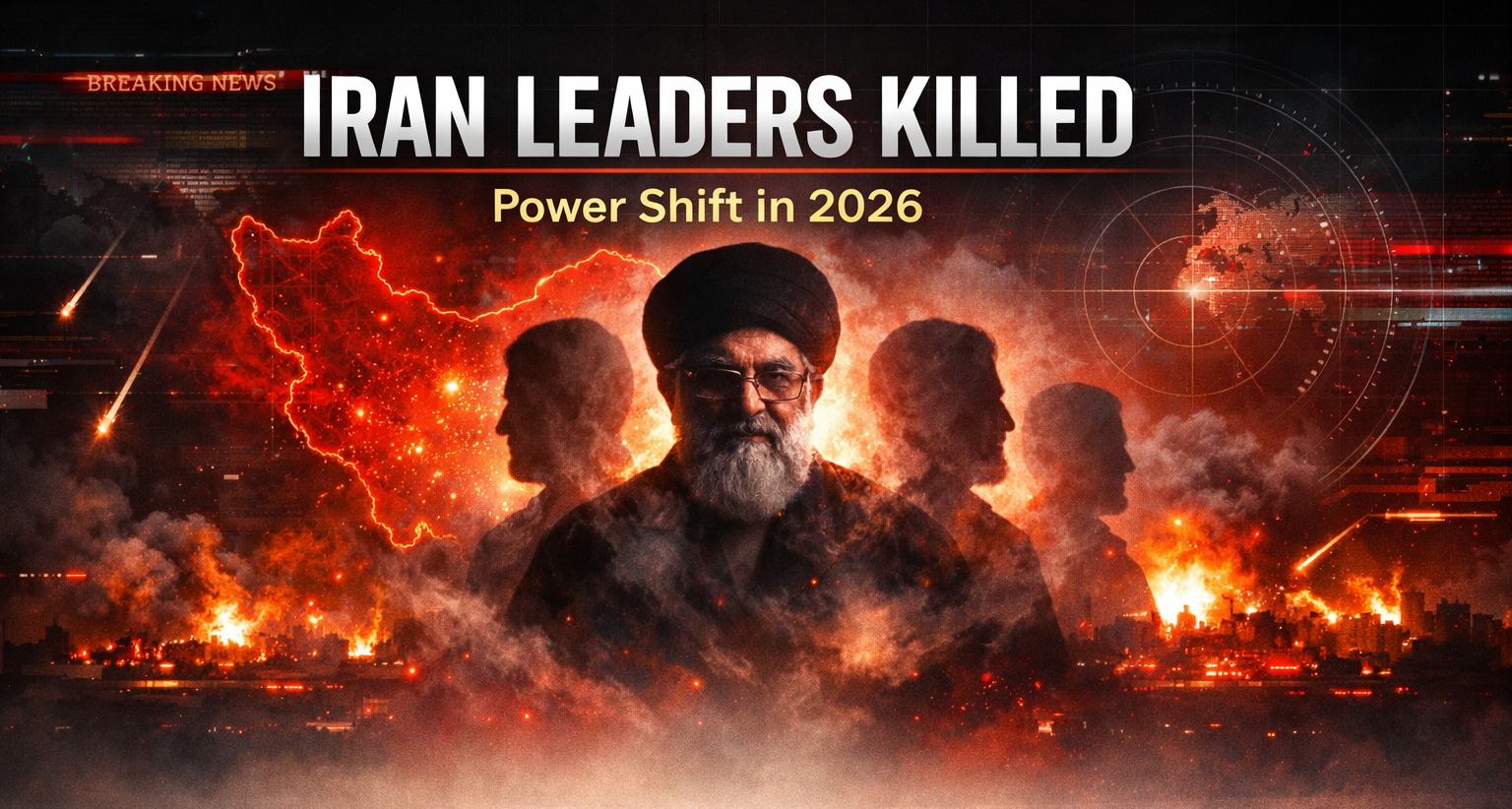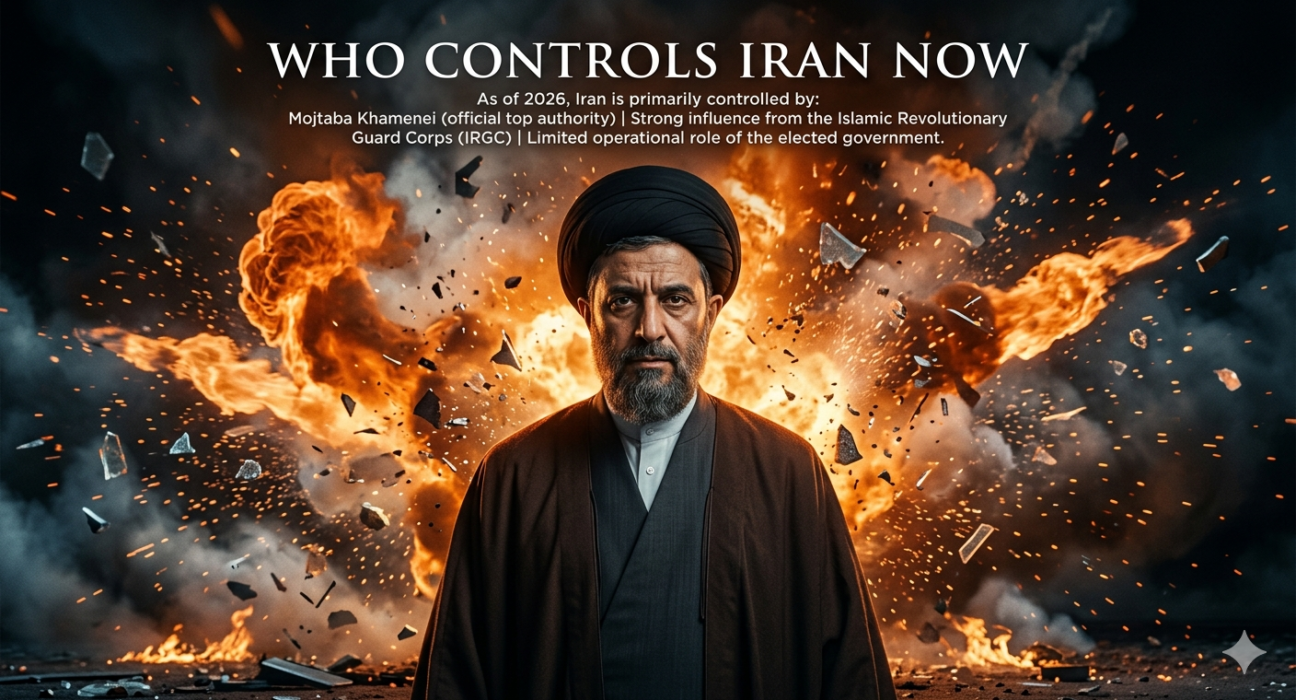
As of 2026, Iran is officially led by Supreme Leader Mojtaba Khamenei. However, real power during the war appears heavily influenced by the military, especially the IRGC.
Who Controls Iran Now? Inside the 2026 Iran War and Power Struggle
Who controls Iran now is not a simple question anymore. If you asked this a year ago, the answer would have been clear. Today, the situation looks very different. War, leadership changes, and internal power struggles have reshaped how Iran operates.
Let’s break this down in a way that actually makes sense.
What Changed in Iran in 2026?
The turning point came in February 2026. A major strike killed Iran’s long-time Supreme Leader. That single event created a power vacuum at the top.
After that, Iran moved quickly. The system didn’t collapse. Instead, it activated a backup structure. A temporary leadership council took control for a short time. Then, within days, a new leader was selected.
Iran officially appointed Mojtaba Khamenei as the new Supreme Leader in early March 2026.
On paper, that solved the leadership crisis. But in reality, things became more complicated.
Who Officially Runs Iran Today?
Iran still follows its original power structure. The Supreme Leader holds the highest authority in the country. That position controls the military, judiciary, and major national decisions.
Right now, Mojtaba Khamenei holds that role.
Alongside him, Iran also has:
- A President (Masoud Pezeshkian)
- A Parliament
- A Judiciary system
So technically, the system still exists and functions.
However, if you look deeper, you’ll notice something important.
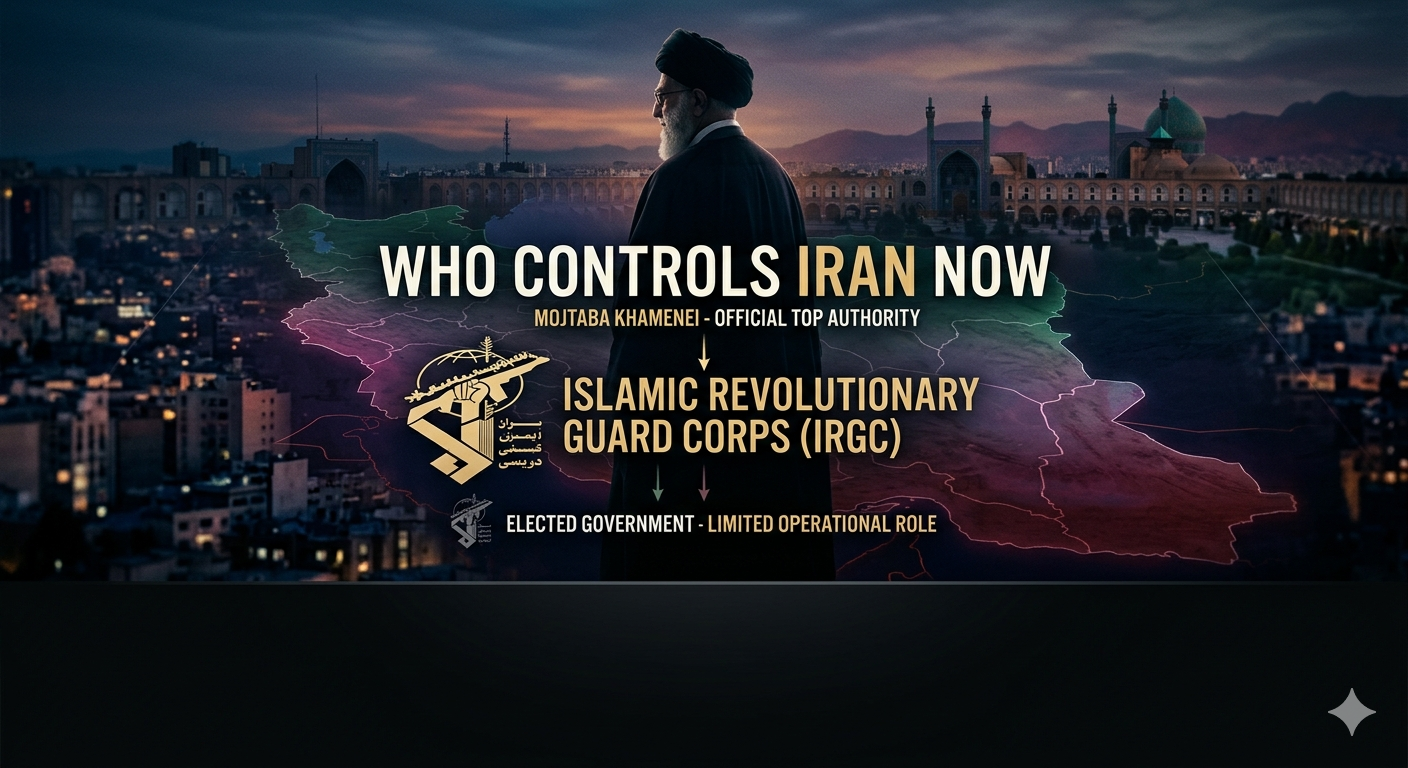
The Real Power: Military Influence
During wartime, power often shifts. Iran is no exception.
Right now, many analysts believe that the Islamic Revolutionary Guard Corps (IRGC) plays a major role in decision-making. In fact, reports suggest that military leadership has taken control of critical operations.
This creates a dual-power situation:
- Official leadership → Supreme Leader and government
- Operational control → Military and IRGC
This doesn’t mean the government disappeared. Instead, the military gained more influence because of the war.
In times of war, governments rely more on military command, which shifts real power behind the scenes.
Is Iran Stable Right Now?
The war has created pressure from multiple sides. Airstrikes, economic issues, and global isolation have affected the country deeply.
At the same time, internal coordination has become harder. Reports indicate that decision-making inside Iran has slowed due to damaged infrastructure and leadership disruptions.
So while the system still stands, it doesn’t operate smoothly.
What Is Happening in the Iran War?
The 2026 Iran war has quickly turned into a global concern.
Here’s what’s happening right now:
- Ongoing military strikes have weakened infrastructure
- Global oil supply faces risk due to tensions in key routes
- Diplomatic talks have failed to reach a clear solution
In fact, recent developments show that the conflict continues to escalate without a clear resolution.
At the same time, international players like China and regional countries are trying to push for negotiations.
How This Affects the World
This conflict doesn’t stay limited to Iran. It affects multiple countries, including India.
Here’s how:
- Oil prices increase globally
- Trade routes become unstable
- Economic uncertainty rises
Because Iran sits near the Strait of Hormuz, even small disruptions can impact global energy supply.
So, when you hear about the Iran war, you’re also looking at a global economic issue.
What Happens Next?
This is the biggest question right now.
Several scenarios can play out:
- The conflict continues and escalates further
- Diplomatic talks restart and reduce tensions
- Internal power struggles reshape leadership again
At this stage, no one can predict the exact outcome. However, one thing is clear — the situation remains unstable.
Frequently Asked Questions
Mojtaba Khamenei serves as the Supreme Leader of Iran as of 2026.
The government officially controls Iran, but the military has strong influence during the ongoing war.
The conflict involves geopolitical tensions, nuclear concerns, and regional power struggles.
The Bottom Line
1. Iran officially has a new Supreme Leader in 2026.
2. However, real power also involves strong military influence.
3. The war has made the situation complex and unstable.